Data quality scores (DQ scores) enable you to measure your data's quality. A higher DQ score indicates better accuracy and completeness of the data. To provide data quality capabilities, Quest Data Intelligence (Quest DI) integrates Quest Data Quality as a data quality analysis partner. To run data quality profiling, you need to configure Quest Data Quality in your Quest DI application.
Configuring Quest Data Quality in Quest DI requires Client ID and Client Secret details available in your Quest Data Quality instance. To get configuration details, refer to the Accessing Quest Data Quality Configuration Details section.
Quest Data Quality supports Single Sign-On (SSO). For more information, refer to Quest Data Quality SSO guide.
To configure Quest Data Quality, follow these steps:
- Go to Application Menu > Settings > Miscellaneous Configurations.
The Miscellaneous Configuration page appears. - Click the Data Profiling Configuration tab.
The Data Profiling Configuration tab appears.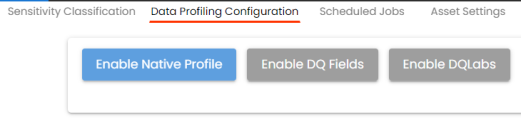
Use the following options for setting up data profiling configuration: - Enable Native Profile: Use this option to enable and configure an Quest Data Quality profile to sync Quest DI and Quest Data Quality and profile data.
- Enable DQ Fields: Use this option to display only the selected data quality parameters across the assets in your organization.
- Enable DQLabs: Use this option to enable Quest Data Quality integration using connection details and schedule a sync job. For more information, refer to the Enabling DQLabs section.
Enabling DQLabs
To enable Quest Data Quality integration, follow these steps:
- On the Data Profiling Configuration tab, click Enable DQLabs.
- Click
 .
.
The DQLabs Configuration tab switches to edit mode and displays connection details. - Enter appropriate values in the fields. Refer to the following table for field descriptions:
- Click
 .
.
The Quest Data Quality configuration is saved.
This configuration requires Client ID and Client Secret from your Quest Data Quality instance. To get configuration details from Quest Data Quality instance, refer to the Accessing Quest Data Quality Configuration Details section.
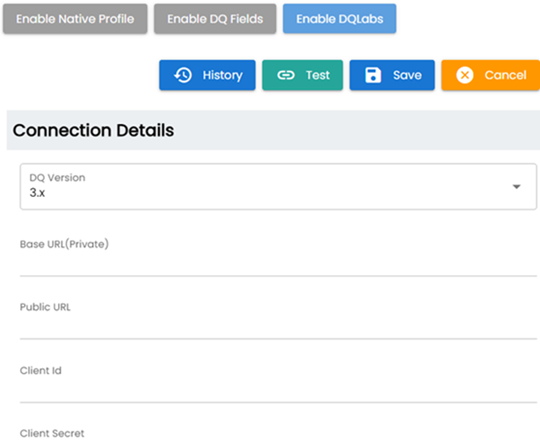
|
Field Name |
Description |
|---|---|
|
DQ Version |
Specifies the version of Data Quality. For example, 2.x, 3.x. |
|
Base URL (Private) |
Specifies the base URL of your Quest Data Quality instance For example, https://cloud.dqlabs.ai |
|
Public URL |
Specifies the public URL of your Quest Data Quality instance For example, https://cloud.dqlabs.ai |
|
Client Id |
Specifies the alphanumeric client ID of your Quest Data Quality instance For example, 2ax1x3xde-b8x8-4b134-aa08-xxx303p2b86f1fk |
|
Client Secret |
Specifies the client secret of your Quest Data Quality instance |
To test the configuration, click  . If the connection with the Quest Data Quality instance is established successfully, then a success message appears.
You can now access Quest Data Quality from Quest DI. To access Quest Data Quality, go to Application Menu > Data Quality.
The next steps involve adding datasets and views in the Quest Data Quality and scheduling a Quest Data Quality job.
Accessing Quest Data Quality Configuration Details
To access Client ID and Client Key in your Quest Data Quality instance, follow these steps:
- Log in to Quest Data Quality.
The Quest Data Quality instance opens. - On the app menu, click
 > Settings.
 - Click
 to expand menu.
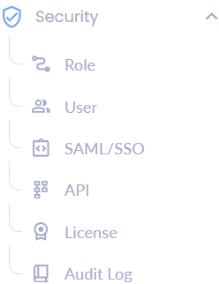
 - Expand Security and click API.
- Click
 to copy them.
 - Paste these values into the Enabling DQ Labs section.
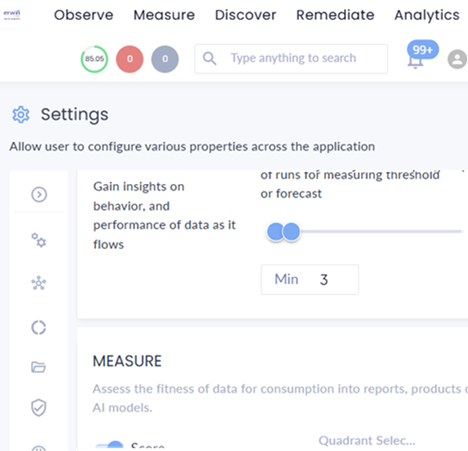
The Settings page appears.
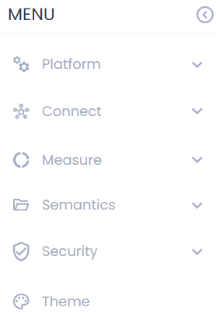
The menu expands and displays additional options.
The API section appears and displays the Client ID and Client Key.
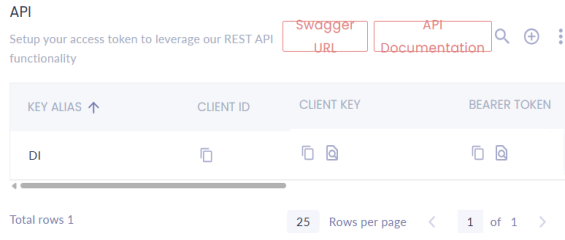
You can also create a new API key to generate a Client ID and Client Key.
To create a new API key, follow these steps:
-
Click
 .
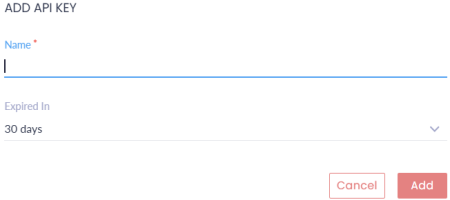
.The ADD API KEY dialog box opens.
-
In the Name field, enter a name for the API key.
-
Select the required option from the Expired In dropdown.
-
Click Add.
A new API key is created, and the Client ID and Client Key are generated.